
BANT vs CHAMP vs GPCT: Which lead qualification framework wins?
In the world of B2B sales, one of the most critical factors for success is effective lead qualification. The ability to determine which prospects are most likely to convert into customers is key to boosting your sales pipeline. To assist in this process, there are several lead qualification frameworks, with three of the most prominent being BANT, CHAMP, and GPCT.
Each framework has its strengths and focuses on different aspects of the qualification process. In this article, we’ll break down BANT, CHAMP, and GPCT, compare them in terms of their effectiveness for B2B sales, and determine which one provides the best fit for your business.
What are the lead qualification frameworks?
Before diving into a comparison, let’s quickly define the three frameworks:
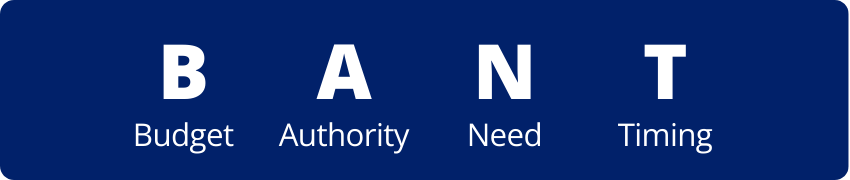
BANT: Budget, Authority, Need, Timing
Budget: Does the prospect have the budget for your solution?
Authority: Is the prospect the decision-maker or influencer?
Need: Does the prospect have a clear need for your product?
Timing: Is the prospect looking to purchase soon, or are they still in the discovery phase?
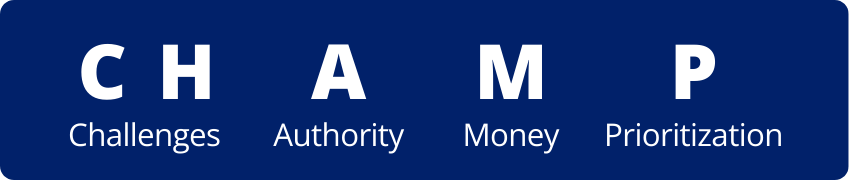
2. CHAMP: Challenges, Authority, Money, Prioritization
Challenges: What are the pain points or challenges the prospect is trying to solve?
Authority: Who in the organization can make the decision?
Money: Does the prospect have the financial resources to proceed?
Prioritization: How urgent is the need for a solution?

3. GPCT: Goals, Plans, Challenges, Timeline
Goals: What are the prospect’s primary business goals?
Plans: Does the prospect have a plan to achieve these goals?
Challenges: What obstacles or roadblocks are preventing them from reaching these goals?
Timeline: What is the timeline for achieving their goals and solving their challenges?
BANT vs CHAMP vs GPCT: A side-by-side comparison
Criteria | BANT | CHAMP | GPCT |
|---|---|---|---|
Focus | Straightforward qualification process | Focus on pain points and urgency | Goal-oriented, strategic approach |
Ideal for | Short sales cycles, clear-cut needs | Complex sales processes, longer cycles | Strategic, goal-focused B2B sales |
Budget | High priority | Low priority | Low priority |
Authority | Key decision-maker focus | Focus on buyer’s challenges and fit | Focus on decision-makers and goals |
Need | Focus on identifying immediate need | Focus on understanding challenges | Focus on identifying and solving challenges |
Timing | Strong emphasis on timing | Prioritization of urgency | Focus on timeline for goal achievement |
Which framework best suits B2B sales?
Each of these frameworks has its merits, and the right choice depends on your sales process and business type.
1. BANT
BANT is a classic qualification model that focuses on the basic fundamentals: does the prospect have the money, authority, need, and urgency to buy? It works well for straightforward B2B sales, where leads are ready to purchase soon, and there’s little ambiguity in terms of their buying process. However, BANT tends to focus more on transactional sales, making it less ideal for complex, longer sales cycles typical in B2B environments.
2. CHAMP
CHAMP is more customer-centric than BANT and emphasizes understanding the challenges the prospect faces. This framework is a great fit for B2B companies that deal with complex sales processes. CHAMP helps sales teams dig deeper into the customer’s pain points and understand how your solution can relieve them. If you are selling a solution that requires more of a consultative approach, CHAMP may be the better choice.
3. GPCT
For businesses with a long sales cycle or complex offerings, GPCT is a powerful framework. It focuses on understanding the prospect’s goals, their plans to achieve those goals, the challenges in the way, and their timeline. GPCT offers a holistic view of the prospect’s business, which is essential for tailoring the sales pitch to their unique needs. It is ideal for solution-based sales in industries where the prospect’s goals drive the buying decision.
Which framework wins?
Ultimately, GPCT provides the most comprehensive and strategic approach to B2B sales. It aligns perfectly with modern sales methodologies that focus on value selling and long-term relationship building. GPCT helps salespeople understand the underlying reasons behind a prospect’s challenges and position their solutions as critical to meeting the prospect’s business objectives.
However, if your sales cycle is shorter and the prospect’s decision-making process is more transactional, BANT is still a solid choice. For a more consultative sales approach, CHAMP strikes a balance between understanding the prospect’s pain points and ensuring that they prioritize your solution.
FAQ
Which framework is best for enterprise sales?
GPCT is the best choice for enterprise sales due to its focus on understanding long-term goals and challenges.
Can I use more than one framework in my sales process?
Yes, many sales teams use a combination of these frameworks depending on the situation. For example, you can start with BANT to qualify leads quickly and then switch to CHAMP or GPCT for deeper engagement.
Which framework is best for a SaaS business?
CHAMP and GPCT are particularly beneficial for SaaS businesses that deal with complex customer needs and longer sales cycles.
When choosing a lead qualification framework, it’s essential to match the framework to your sales process. If you want to build a long-term relationship with your clients, GPCT offers the most holistic approach. For shorter cycles, BANT is still highly effective. And for more consultative sales, CHAMP offers a perfect balance between addressing pain points and urgency.
To learn more about optimizing your sales process and using the right frameworks for your business, book a consultation with us today. Let us help you drive qualified leads and increase your sales conversions.
